Before January 2000, if you wanted to run a community radio station in the United States and you were not a university, a state public broadcasting agency, or a very well-funded nonprofit that had bought its way in years earlier, you were effectively locked out. The FM dial was full, the noncommercial educational (NCE) reserve at 88 to 92 MHz had long since filled up with college licensees and religious broadcasters, and the minimum full-power NCE transmitter was a six-figure capital project before you touched a studio. The door was closed. Then the Federal Communications Commission, under Chairman William Kennard, pried it open with a new service class called Low Power FM.
What happened next took longer and got messier than almost anyone predicted. The path between the 1999 rulemaking and on-air reality runs through a legislative ambush, an eight-year application freeze, and a single 2013 filing window that permanently changed the shape of American community broadcasting.

The pre-LPFM landscape
To understand what LPFM changed, it helps to remember what it replaced, which was essentially nothing. Commercial FM had no room for community operators. The noncommercial reserve at 88.1 through 91.9 MHz was the only legal lane for nonprofit broadcasting, and by the late 1990s most of those frequencies in populated markets were held by state university systems, church-network affiliates, and large public radio licensees running full Class A or better signals. A Class A FM is 6 kilowatts ERP at 100 meters HAAT, which gives you a roughly 28 kilometer reception radius. That station costs real money to build, and the FCC application process assumed you had it.
A handful of genuinely community-run operators existed at full power, most of them children of the Pacifica model pioneered by KPFA in Berkeley in 1949. KPFK in Los Angeles, WBAI in New York, WFMU in East Orange and later Jersey City, KCSB in Santa Barbara, WORT in Madison, WMNF in Tampa. Each was a survivor of a specific historical window and there was no meaningful way to copy their example. Meanwhile, the FCC spent most of the 1990s chasing unlicensed micropower operators with enforcement actions. The Prometheus Radio Project grew directly out of that tension, arguing that the legal ban on low-power broadcasting was a policy choice, not a spectrum inevitability.
The 1999 rulemaking
Kennard's FCC agreed. In January 1999, the Commission issued a Notice of Proposed Rulemaking suggesting three new low-power classes. By January 2000, the final rules authorized two of them, the LP10 (10 watts) and LP100 (100 watts), with the latter becoming the service we now call LPFM. The core technical parameters have stayed the same since: 100 watts maximum effective radiated power at 30 meters HAAT, producing a protected service contour of about 5.6 kilometers. Nonprofit-only. No commercials. Secondary status on any second-adjacent channel conflict. Local origination expected.
The 5.6 kilometer number is the one people argue about most. It sounds tiny and in absolute terms it is, but it is a serviceable neighborhood station in a dense city and a plausible small-town station in rural America. You are not building a regional outlet. You are building something whose listeners can reasonably drive to the studio in fifteen minutes. That turns out to matter editorially.
The NAB ambush
The National Association of Broadcasters, representing commercial radio owners, opposed LPFM on the grounds that low-power stations would cause interference to existing full-power operations. The FCC's own engineering study had shown that 100 watt stations could safely coexist with their full-power neighbors under the standard third-adjacent channel protection rules. NAB lobbied Congress anyway, and in December 2000 Congress passed the Radio Broadcasting Preservation Act, which imposed a third-adjacent channel protection requirement on LPFM that did not exist for any other class of FM station.
In practical terms, the third-adjacent rule made LPFM almost impossible to license in major markets. Entire cities were simply unavailable. A 2003 Mitre Corporation study commissioned by the FCC concluded that the interference concerns were unfounded and recommended repealing the restriction. Congress did nothing with that report for seven years. LPFM existed on paper but the spectrum map said no.
The eight-year wait and the Local Community Radio Act
Between 2000 and 2010, the LPFM service mostly sat in suspended animation. The original 2000-2001 application windows produced about 800 grants, heavily weighted toward rural areas where the third-adjacent protection was not a binding constraint. There was no second window. Advocates (Prometheus most visibly, along with the National Federation of Community Broadcasters and allied public-interest groups) spent the decade pushing Congress to undo the 2000 restriction.
The Local Community Radio Act finally passed in December 2010 and was signed into law by President Obama in January 2011. It did the one thing that had to be done: it repealed the third-adjacent channel restriction, bringing LPFM back into alignment with the rest of the FM rules. The FCC spent about two years writing implementing regulations and technical guidance, and in October 2013 it opened the second LPFM application window. For many communities, this was the first real chance to get on the air.
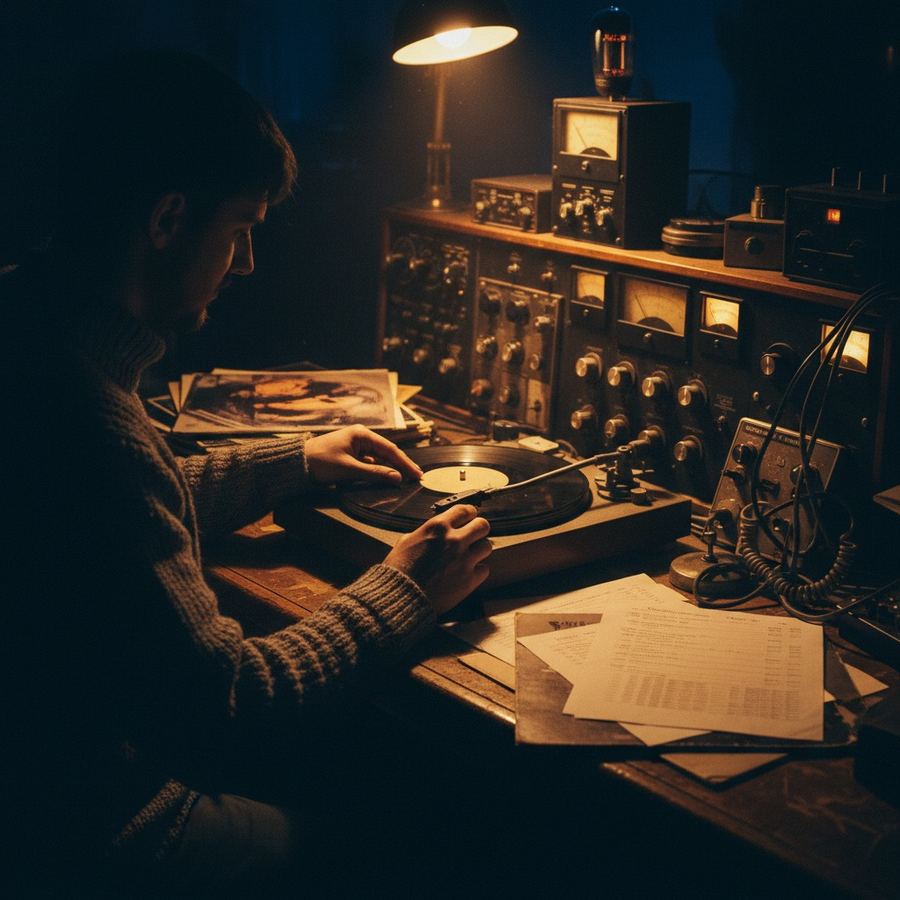
The 2013 window and what came out of it
The 2013 window ran for two weeks and drew roughly 2,800 applications. Not all of them would survive the mutually exclusive (MX) resolution process, in which multiple applicants for overlapping frequencies are scored against each other on a point system that rewards local presence, established community service, and diversity of ownership. After MX groups were settled and construction permits issued, something on the order of 2,000 LPFM stations ultimately made it to air. The exact count drifts because stations go silent, permits expire, and the FCC cancels unused licenses, but the 2013 cohort roughly tripled the size of the service.
The geography is telling. LPFM is concentrated in smaller cities, suburban edges, and rural regions where the spectrum was available. In Los Angeles, Chicago, and other dense urban markets, almost no new channels opened up even after the LCRA passed. The denser the population, the worse the LPFM opportunity, which is an ongoing irony of a service that was pitched as an urban-diversity intervention.
LPFM in practice
A functioning LPFM in 2026 looks roughly like this. It is held by a 501(c)(3) nonprofit, a church, a school, or a local government. It operates 100 watts ERP from a co-located tenancy on an existing tower. Its studio is a converted office suite, a repurposed storefront, or a room in a church basement. It has a few paid staff at best, usually none, and between eight and sixty volunteer hosts on a weekly schedule. Its operating budget runs $10,000 to $150,000 a year, funded by listener pledges, underwriting announcements (legally distinct from commercials), and occasional grants.
Programming is what differentiates LPFM from its full-power predecessors. An LPFM typically runs ten to twenty specialty shows a week, plus syndicated content from PRX, Pacifica, or NFCB partner stations, plus local news or talk if anyone on the volunteer roster has the stomach for it. The sound is patchwork and often much more interesting than what you get further up the dial. For more on the people who make that programming work, see volunteer DJ culture in small market stations.
The burnout problem
The uncomfortable part of the LPFM story is that running one of these stations is hard, and the people who do it tend to exhaust themselves. A typical LPFM has one or two unpaid people holding the whole operation together, handling FCC compliance, managing the public file, filing biennial ownership reports, running the EAS weekly tests, chasing volunteer DJs who missed their shifts, and keeping the transmitter on the air. Five years in, those people are often gone. Stations go dark not because the spectrum was taken away but because nobody had the time to keep doing the work for free. It is worth understanding this when thinking about starting a community radio station in the first place.
The FCC has not announced when, or whether, another LPFM filing window will open. The 2013 window was originally framed as a one-time opportunity, and the Commission has periodically said it will consider a future window but has not committed to one. The slots that exist now are, for practical purposes, the slots that will exist. That makes the 2013 grantees, for better or worse, a fixed cohort carrying most of the weight of the LPFM experiment. Related reading: the disappearing small-town AM station and why local radio still matters.
The verdict, twenty-six years after the first LPFM rules, is mixed but clear. The service did what it was designed to do. It created thousands of licensed local voices where there had been none. It also exposed, hard, how much of community radio is really about sustained human labor rather than regulatory access. The spectrum is necessary. It is nowhere near sufficient.