Todd Storz supposedly came up with the Top 40 idea in a bar in Omaha in the early 1950s, watching a waitress feed the same nickel into the jukebox for the same three songs. Whether or not the origin story is tidy, what followed reshaped American radio permanently. Programmers learned that repetition sold, that personality could be packaged, and that a station's "sound" was more valuable than any individual record on the playlist. That insight is still doing most of the work on commercial radio seventy years later. Radio culture is worth writing about because the medium's shifts explain a surprising amount about how the rest of mass media learned to operate.
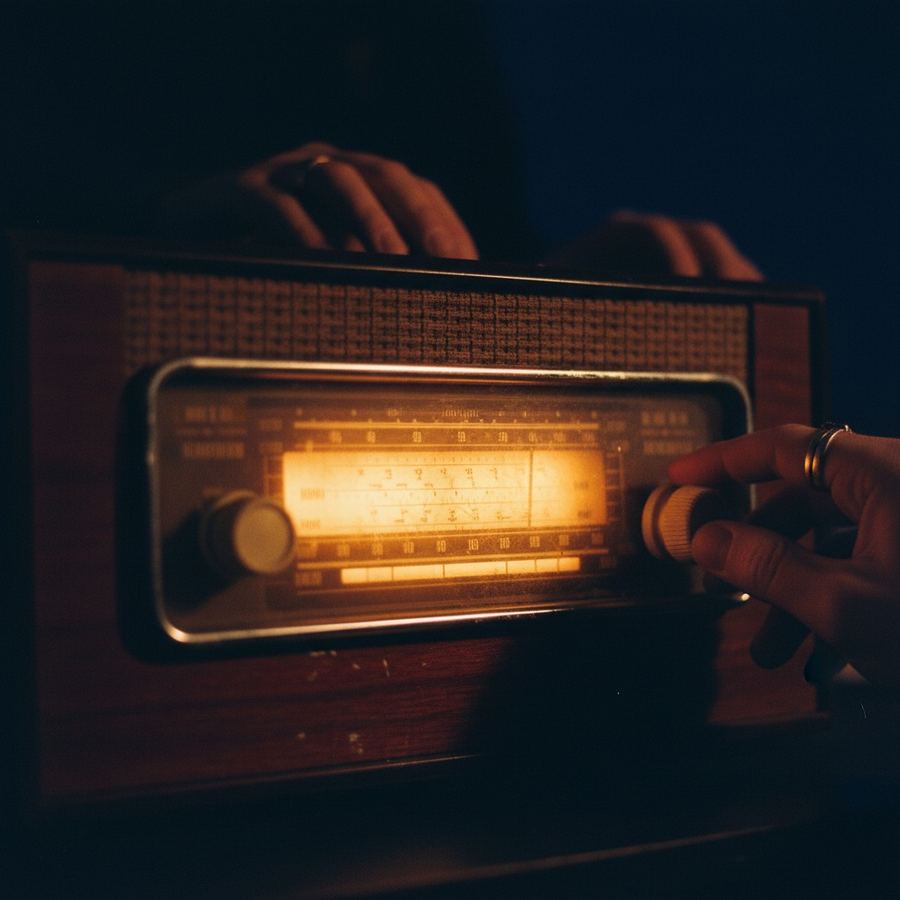
What this section covers
Four threads run through the Radio Culture beat. The first is the argument for local radio as a civic and cultural object, not just a distribution pipe for recorded music. The second is the rise of format radio itself, from the Storz and Gordon McLendon Top 40 experiments through the AOR rock formats of the 1970s, urban contemporary in the 1980s, and the modern CHR, AC, country, and talk blocs. The third is the AM to FM shift, which was not just a technical migration but a complete re-sorting of who listened to what and why. The fourth is syndication: the slow trade of local morning shows and afternoon drive personalities for voice-tracked national content, especially after the 1996 Telecommunications Act lifted the national ownership cap.
None of these stories are nostalgia pieces. Local radio was often badly run, format radio was frequently cynical, and the AM band has always carried its share of con artists alongside the legitimate operators. What matters is how the choices made inside the industry shaped the sound coming out of the speaker, and what that sound trained generations of listeners to expect.
Why format still matters
When consolidation accelerated in the late 1990s, a small number of owners ended up controlling hundreds of stations each. Programming got centralized. Music logs got standardized. The local DJ shrank, in many markets, to a voice-tracked shift recorded two states away. That trade produced real efficiencies and real losses, and both are worth naming. A reader who understands format radio can listen to a commercial FM station for ten minutes and tell you its category, its target demographic, its probable ownership structure, and roughly when it last flipped. That is a useful skill, and it is also how you start hearing the medium as a system rather than a background hum.
Articles in Radio Culture
ESSAY
Why Local Radio Still Matters
Weather alerts, school closings, and a human voice during an overnight emergency. The case for the medium that refuses to be replaced by an app.
HISTORY
The Rise of Format Radio
From Top 40 in Omaha to AOR, urban contemporary, AC, and CHR. How programmers standardized the dial and what it meant for the listener.
HISTORY
AM vs FM: The Cultural Shift
In 1972 AM still dominated. By the mid-1980s FM had taken music almost entirely and AM was becoming the talk and news band it is today.
ESSAY
Syndication Versus Local Voice
Voice tracking, national morning shows, and the economics that made a local afternoon drive DJ a luxury instead of a baseline.
If you are new to the subject, the local radio essay is the cleanest starting point. From there, the format radio history gives you the structural vocabulary to make sense of the other two pieces. All four articles are meant to be read on their own, but they talk to each other, and reading them in sequence lines up the argument the section as a whole is making about what commercial radio has been, what it is now, and what parts of it still earn the attention of a serious listener.