WLW in Cincinnati briefly operated at 500 kilowatts in the late 1930s under an experimental authorization, making it the most powerful station ever licensed in the United States. The signal reached across most of the continent at night, complaints rolled in from smaller stations blotted out by its carrier, and the FCC eventually pulled the experimental license. WLW's 500-kilowatt period lasted only a few years, but it is the kind of detail that explains why the history of American radio cannot be told as a smooth curve. Station histories are full of these moments: experiments that changed policy, format flips that redirected a whole market, silent carriers that waited decades for a buyer. Station Stories is where the publication collects that material.
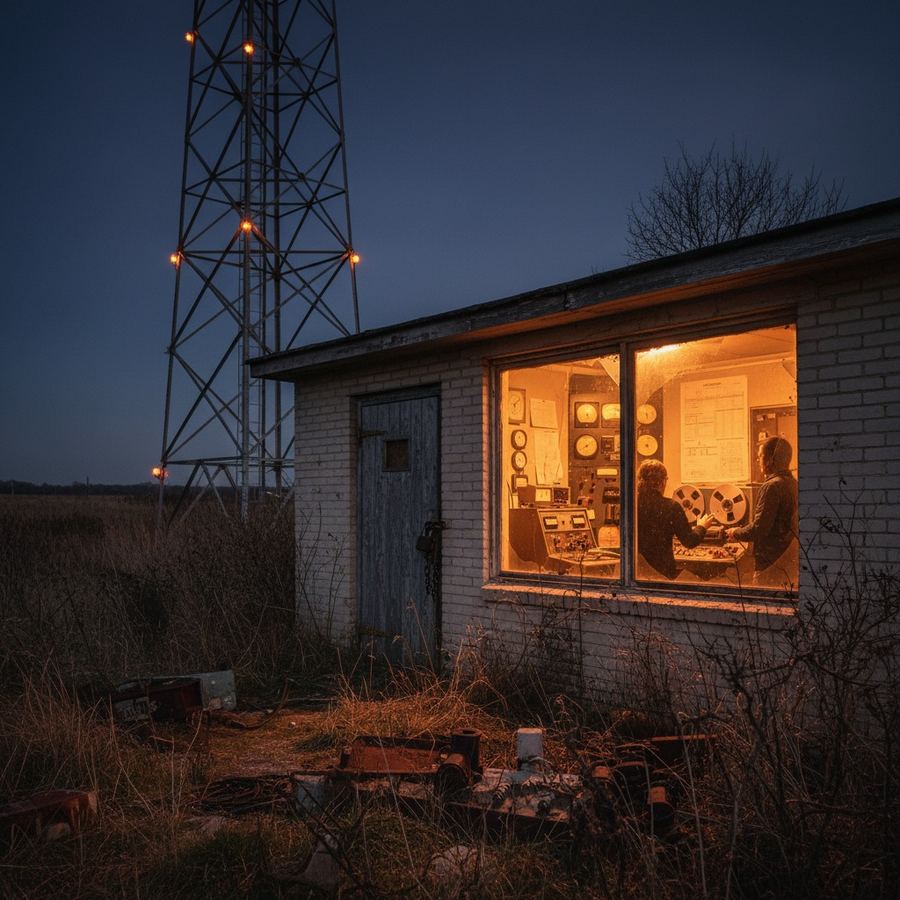
Why the archival beat matters
Every station carries a license history, and most of those histories are boring in the way municipal records are boring: paperwork, callsign changes, ownership transfers, engineering amendments. What makes them worth writing about is the moment when the paperwork starts describing something culturally consequential. A small-market AM going dark in 2019 after a century on the air is a business story on the surface. Under the surface it is usually a story about ad revenue migrating to digital, absentee ownership, expensive tower maintenance, and a local manager who kept the lights on for ten years longer than the spreadsheet said was possible.
Format changes are similar. When a station flips from country to classic hits, or from full-service AM to all-sports, the move is typically explained in trade press as a ratings decision. That is accurate and incomplete. The flip also represents a specific read of what the local market will support, a judgment about what the competing stations are missing, and often a goodbye to a listener base that built its weekly habits around the old format. Writing those moments up carefully is the archival work this section is trying to do.
The long shadow of talk radio
One of the section's running subjects is how talk radio became the dominant AM format in the United States. The Fairness Doctrine was repealed in 1987. Satellite delivery made national syndication cheap at roughly the same time. Rush Limbaugh went national in 1988. Within a decade, most viable AM stations were running conservative or general-interest talk in at least part of the daypart, and the local full-service AM that once carried news, weather, farm reports, high school sports, and a local morning host was already an endangered species. The talk radio story is not just a political story, it is a structural story about why the AM band sounds the way it does today, and why the stations that resisted the shift stand out so sharply.
Articles in Station Stories
HISTORY
The Disappearing Small-Town AM Station
Farm reports, high school football, the obituary hour, and why so many local AMs are now silent or running syndication.
HISTORY
Format Changes That Shaped Modern Radio
AOR to classic rock, beautiful music to smooth jazz to adult contemporary, and the flips that rewrote whole markets.
HISTORY
When Stations Go Dark: The History of Silent Frequencies
The FCC's silent STA rules, the twelve-month clock on an unused license, and what actually happens when a transmitter shuts off.
HISTORY
The Talk Radio Format: A History
From phone-in shows in the 1960s through the 1987 repeal of the Fairness Doctrine and the national syndication boom.
These pieces are meant to function as a small archive. Read them in any order. The silent frequencies article is probably the most useful if you have ever watched a local station quietly disappear and wondered what happens next, legally and practically.