The paperwork is a letter to the FCC, and it has to land within ten days of the day the station stopped transmitting. A licensee that takes a station off the air for any reason (a transmitter blew up, a tower came down in a windstorm, a lease expired, a payroll bounced, a family decided to stop feeding a dying AM that had been their father's) has ten days to notify the commission. A clock then starts. The station has twelve months. If the carrier does not come back on before the anniversary of going silent, the license deletes automatically under Section 312(g) of the Communications Act and the call letters stop existing as a legal entity. This happens to somewhere between fifteen and forty stations a year, most of them AMs in markets you have never heard of, and it is the most bureaucratic, least dramatic ending possible for what was usually somebody's working life.
The twelve-month rule is the most important piece of regulatory language most listeners have never heard of. It is the reason a lot of radio properties spend their last year in regulatory purgatory, where the license technically still exists but the transmitter site is abandoned, the studio is cleared out, and the owner is making one last phone call a month to see if anybody will buy the stick before the clock runs out.
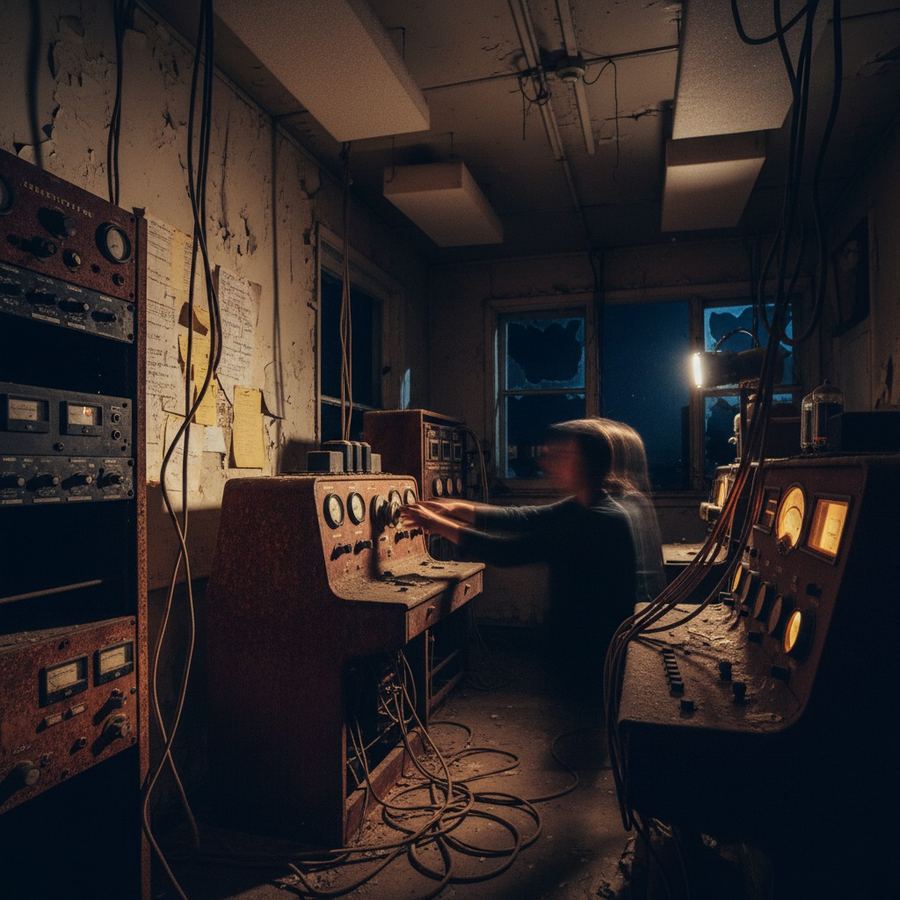
How a station gets to silent
Silent status has several on-ramps. The most common in the 2010s was financial failure. A small-market AM or an underwater Class A FM that could not make its tower lease payment, STL fees, ASCAP/BMI/SESAC payments, and electricity bill in the same month would eventually stop. The owner would sign off on a Friday, lock the door, and file the silent notice on Monday. The intent was usually to come back. Going silent made the cash flow worse, because now there was no listener count and no reason for an advertiser to come back. More on the small-market operating conditions behind these failures is in the disappearing small-town AM station.
The second on-ramp is mechanical. A lightning strike takes out a tuning house. A guy wire snaps and brings the tower down. A tornado takes the antenna. The only contract engineer in the state qualified to restring an array retires. Stations have gone silent because a transformer pole failed and the utility would not prioritize the repair, or because the landowner leasing the tower site for thirty-five years died and the heirs would not renew. These are not editorial decisions. They are the physical world intruding on a license that depends on a working physical plant.
The third on-ramp is estates and license shuffles. An owner dies and the station is an asset in probate. The heirs do not want to run a radio station. The station gets shut off while the paperwork proceeds. Sometimes a buyer is found and the license is assigned before the clock runs out. Sometimes the sale falls apart in the eleventh month and silent status converts to deletion. Either way, a year of dark is enough to kill any legacy audience. Listeners find something else and do not come back.
Section 312(g) and the twelve-month line
Section 312(g) was added to the Communications Act by the 1996 Telecommunications Act, and its purpose was to stop the warehousing of broadcast licenses. Before 1996, a licensee could park a license in silent status for years while waiting for a buyer, and the commission had limited tools to force the issue. After 1996, the twelve-month rule gave the FCC bright-line deletion authority. The commission has some discretion to grant extensions when a tower was destroyed by a natural disaster and the rebuild is legitimately in progress, but the default is automatic deletion and the burden is on the licensee to show cause. The historical docket is on fcc.gov for anyone who wants to walk the paper trail on a specific call sign.
Once a license deletes, the frequency goes back into the pool. Depending on the band and the allocation, it may be opened for new applications in the next filing window or simply sit vacant because no engineer can get a workable proposal through the protection contours. Some of the deleted AM frequencies from the 2015 through 2020 wave are still vacant, because the protection requirements are dense enough that a new applicant cannot fit without interfering with something still on the air. The vacant allocation is functionally a ghost.

The dark-and-dirty auction phenomenon
The FCC periodically holds what the trade press calls a dark-and-dirty auction: a reopening of expired or surrendered construction permits and licenses for competitive bidding. Winners have to put up new construction within the specified build-out period or forfeit the permit. Most of the 2020s auction inventory at the AM end of the dial has been unattractive to commercial buyers, because the economics no longer support building a new AM from scratch. Former commercial AM allocations have been picked up, if at all, by noncommercial educational applicants or specialty programmers with a religious or ethnic format niche.
Dead clear-channels
Through the 2010s, several high-power AMs that had anchored their markets for decades went silent or cut operation in ways that would have been unthinkable a generation earlier. The 500 kW experiments at WLW Cincinnati on 700 kHz from 1934 to 1939 that briefly made WLW "the Nation's Station" were long over, but WLW remained a 50 kW Class I-A clear-channel into the 2020s. Others were less durable. The 1928 FCC General Order 40 reorganization and the later Class I-A allocation had been the legal foundation protecting these stations from interference for most of the twentieth century. When 1980s deregulation eroded clear-channel protection, the viability of some 50 kW Class A facilities slipped. A few went silent or filed modifications that reduced nighttime coverage. Anyone who remembers the AM band in the 1970s can hear the difference immediately.

What happens to the site
A typical AM tower sits at the center of a buried radial ground system, usually 120 copper wires laid at equal angles a few inches deep across a quarter-wavelength radius. At 1 MHz that radius is roughly seventy meters. At 700 kHz it is over a hundred. As the copper market ran up in the 2010s, scrapping crews started pulling radials out of closed-down AM sites across the country. Anyone walking a former AM site a few years after the tower came down can usually find the trenched scars where the radials were pulled and the occasional frayed stub of solid copper sticking up at an odd angle.
Towers come down two ways. The controlled drop is the preferred method: a rigging crew cuts the guy wires on one side and lays the tower in a pre-cleared direction. The uncontrolled drop is what happens when nobody pays for the controlled drop and the first major ice storm does the job for free. Either way, after the tower is down there is usually an environmental remediation step, because decades of generator exhaust, transformer oil, and occasionally underground storage tanks leave contamination that has to be addressed before redevelopment. The redevelopment is almost always residential or light commercial: subdivisions, self-storage, auto body shops, and in at least one Sunbelt case, a mid-size church parking lot. The tuning house that held the phasor cabinet sometimes survives as an odd little concrete block shed out back.
The quiet after
Transmitter site visits are a specific kind of bittersweet. There is almost always a single standing artifact. Sometimes it is the anchor pad for the base insulator, a three-foot by three-foot concrete block with four threaded studs in it. Sometimes it is the transmitter building, locked and boarded. Sometimes it is just the outline of the guy anchors in the grass. The people who took the station seriously are the ones who bother to go back and look after it has gone dark. What they are doing is making a mental accounting of a piece of their own community's infrastructure that stopped existing. Silent frequencies are not only a regulatory category. They are an acoustic absence in a specific geography, and some of those absences are permanent. What the loss of a local signal actually costs the surrounding community is laid out in why local radio still matters, and the longer arc of format changes that killed many of these signals is covered in format changes that shaped modern radio.
The twelve-month clock is ticking right now on several dozen stations that were on the air a year ago and will not be next spring. By the time the paperwork catches up, the towers will already be down on most of them. That is the normal operating speed of an ending in American broadcast radio. Nobody writes a ceremony for it. There is just a letter, a dated envelope, and a filename in a database nobody opens.