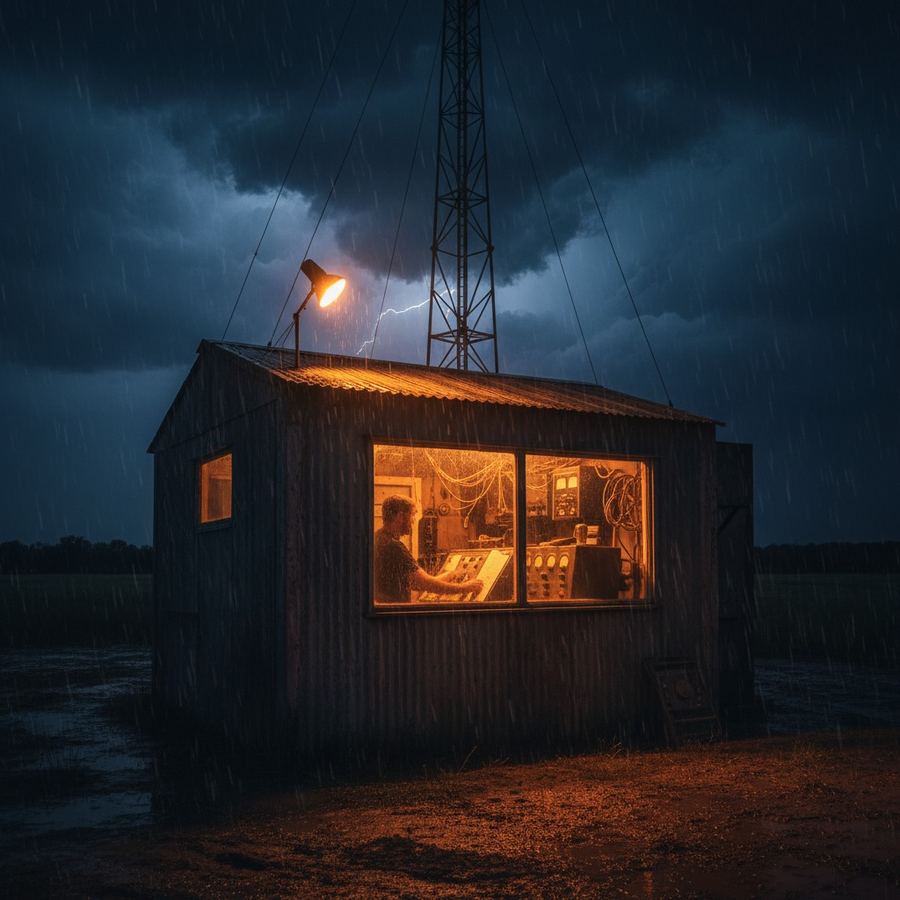
At 6:16 a.m. on September 20, 2017, Hurricane Maria made landfall near Yabucoa, Puerto Rico, as a high-end Category 4 storm. Within hours, the cellular network was effectively gone. Ninety-five percent of cell sites were out of service. The power grid had collapsed across the entire island. Television was dark. Streaming audio was a memory. What remained on the air was WAPA-AM 680 in San Juan, broadcasting continuously from a studio running on a generator, taking calls from anyone who could find a working phone line and relaying messages from relatives stranded in the mountains to relatives trying to get word out from San Juan. For weeks, WAPA was the informational spine of the island. People taped paper notes to their car dashboards that said things like "listening to 680" because that was the entire information environment.
That is the version of local radio people forget exists until they need it. When the fiber is cut, when the cell towers are saturated, when the data center hosting your favorite streaming service is also out of power, an AM transmitter with a backup generator and a person sitting in front of a microphone is a piece of infrastructure the internet cannot replace. The FCC has acknowledged as much in its repeated rulemaking on broadcast resilience, and the agency's own crisis documentation at fcc.gov continues to reference over-the-air broadcast as the backstop of last resort.
The things streaming cannot do
Emergencies are the dramatic case, but they are not the everyday argument. The everyday argument for local radio is more boring and more important. It is the high school football game on Friday night in a town of 4,000 people where the home side has called the game themselves for the last thirty years. It is the road conditions report at 6:40 a.m. when the county is under a freezing rain advisory and the school board has not yet called it. It is the obituary read at the top of the 9 o'clock hour because the funeral home in town has been calling it in to the morning guy since 1978. It is someone's Australian shepherd that got out during the fireworks on the Fourth of July and a phone call to the station gets the dog's description on the air by 11 a.m. None of that scales. None of that makes money for a streaming platform. None of it is on a podcast.
There is no algorithm that knows which back road gets impassable first when the river comes up, but the farm guy at the 1kW daytimer does, because he has been driving it for forty years. That is the kind of information density that collapses the second a local station stops being local. And across the United States, local stations have been steadily ceasing to be local since at least the late 1990s. The 1996 Telecommunications Act removed the national ownership cap on radio, and within ten years the consolidation wave had reduced much of the country to three or four large corporate owners running voice-tracked shifts from distant control rooms. If you would like a fuller treatment of how that happened, see our piece on syndication versus the local voice.
Voice-tracking and the hollowing out
Voice-tracking is the technology that killed a lot of what local radio used to be. The idea is simple enough. A single announcer sitting in a studio in Atlanta or San Antonio records a shift's worth of breaks, references a local weather headline pulled from a wire, drops in the name of the town, and ships the audio to a station automation system 900 miles away. The result sounds like a live DJ if you are not paying attention. The result does not, however, know that the Main Street bridge is out or that the junior varsity game got moved to 5 p.m. It cannot take a call. It cannot put an Amber Alert on the air in the two minutes that matter. It exists only to fill the hours between commercial breaks at the lowest possible labor cost.
The hollowing was most brutal in small markets, where a single owner often operated four or five stations on a single staff of two or three people, and where the local voices that used to define the town's morning simply were not replaced when they retired. By the mid-2010s, entire counties in the Plains and the Upper Midwest had no live local airshift of any kind between the morning drive and the following 6 a.m. The transmitters were still on. The towers still put out 5kW into the night sky. But there was no one home.
The stations still doing it right
Not everywhere gave in. There are still stations where the morning guy knows the sheriff by first name and reads the school lunch menu at 7:45. There are still classical stations that take requests by phone. There are still college stations staffed by students doing a three-hour Thursday night jazz shift who are the only human being within a 60-mile radius putting Charles Mingus on the air that week. Low power FM, authorized by the FCC in 2000 after a long fight that pitted community broadcasters against the major commercial owners, added hundreds of community voices in markets that had none. Our piece on how low-power FM changed community radio walks through that fight and who ended up with licenses.
Public radio filled some of the gap. NPR member stations, particularly the ones still committed to a news operation of their own rather than just relaying the network feed, remain the only functioning local newsroom in an uncomfortable number of American counties. The National Federation of Community Broadcasters at nfcb.org has been tracking this shift for years and their numbers are not encouraging, but they are clear about where the real local journalism still lives: on stations that did not sell out to a national chain.
What a podcast cannot replace
It is fashionable in media commentary to describe podcasting as the inheritor of radio, and in a narrow sense that is true. If what you loved about radio was the voice of a specific person talking about a specific subject for thirty minutes at a time, podcasts are often better. They are on demand. They are longer. They are not interrupted by ads for a car dealership. For a taxonomy of the real overlap and the real differences, see podcasts versus radio, the overlap.
But podcasts are not local and they are not live. They do not tell you that the power is out in the east end of town or that the tornado is now west of the interstate moving east-northeast at 40 mph. They do not read the obituary your neighbor called in. They are a content format. Local radio, when it is actually local, is a piece of civic infrastructure. Those are different things. It is worth being honest about which one people think they are arguing for when they say radio is dying. The format can die. The infrastructure cannot be allowed to, or you end up with another island in the dark wondering where the information went.
The argument to keep making
The case for local radio is not nostalgia and it is not a brief for any particular technology. AM, FM, HD, internet stream, it does not really matter. The case is that a community benefits enormously from having a live human being within its own area code, on a signal that reaches every car and kitchen and shop floor, who is paid to know what is happening and who is willing to go on the air at 3 a.m. if something happens at 3 a.m. That job description has not changed since KDKA signed on in Pittsburgh on November 2, 1920, and read the Harding-Cox election returns off a wire. It will not change. The question is only whether any given town still has someone doing it. Some do. Most used to. If you want a starting point for finding the ones that still do, the how to find good local radio stations guide is a practical place to begin.
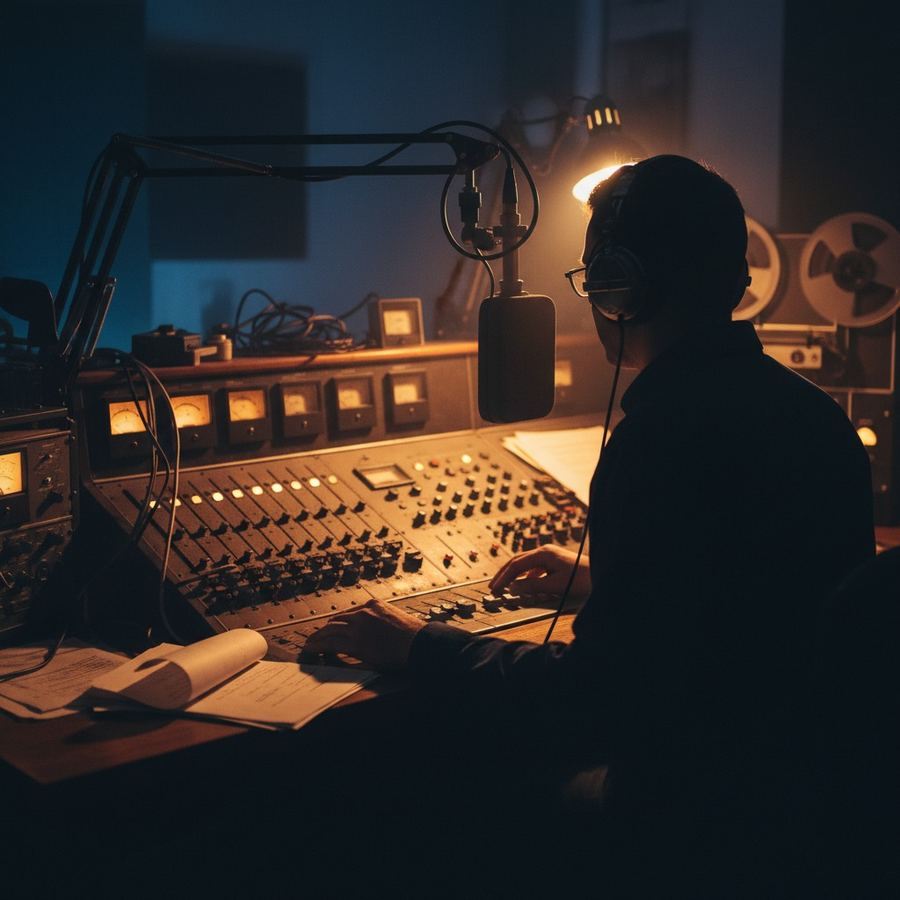
Local radio matters because the alternative, whether imposed by consolidation or by a Category 4 storm, is silence where a voice ought to be. That silence is expensive. Some towns have already figured that out the hard way.