In 1972, roughly 75 percent of all radio listening in the United States was still on AM. By 1979, FM had crossed 50 percent for the first time. By 1988, FM was approaching 80 percent and AM was in something close to free fall. Inside those numbers is one of the fastest band migrations in the history of any consumer medium, and a lot of local radio died along the way. It is tempting to treat the shift as purely technical, a better signal winning on its merits, but the story is stranger and slower than that. FM had been technically superior for decades before anyone bought it.
Armstrong's band
Edwin Howard Armstrong invented frequency modulation broadcasting and demonstrated it publicly in 1935 at the Institute of Radio Engineers meeting in New York, putting an FM signal on the air from an RCA transmitter on top of the Empire State Building. The result was astonishing to anyone used to AM's static crashes and narrow fidelity. FM carried full-range audio, something like 30 Hz to 15 kHz, with a noise floor so low that the dead air between announcements sounded physically silent. It was immune to most electrical interference. It could do stereo, which the FCC authorized in 1961 with the pilot-tone subcarrier system that is still in use.
All of that was established technology by the early 1960s. And yet through the 1960s, FM was a ghost band. Most car radios did not have it. Most kitchen radios did not have it. Major broadcasters treated their FM licenses as regulatory obligations, simulcasting the AM signal because they had to put something on the frequency. Nobody was listening, so nobody was selling ads on FM, so nobody was spending money to program it, so nobody was listening. It was a perfectly circular problem and it sat that way for about twenty years.
Why AM ruled the 1960s anyway
AM had gotten very good at the thing AM could do. Clear-channel 50kW stations at night threw signals across half a continent. WLS Chicago could be picked up clean in Georgia after dark. WABC New York hit the Florida coast. WLW Cincinnati had, in the 1930s, briefly run a 500,000-watt experimental transmitter that put an audible signal as far as the Rocky Mountains, and although the FCC rolled WLW back to 50kW in 1939, the legend stuck and the clear-channel stations retained enormous nighttime reach. Top 40 AM, running the Storz and Drake format clocks, had the personalities. Cousin Brucie at WABC, the Real Don Steele at KHJ, Larry Lujack at WLS. The hits were on AM, the jocks were on AM, the payola scandals of the Alan Freed era had happened on AM, and the car radio that came with your 1964 Impala was an AM-only push-button unit with no provision for anything else.
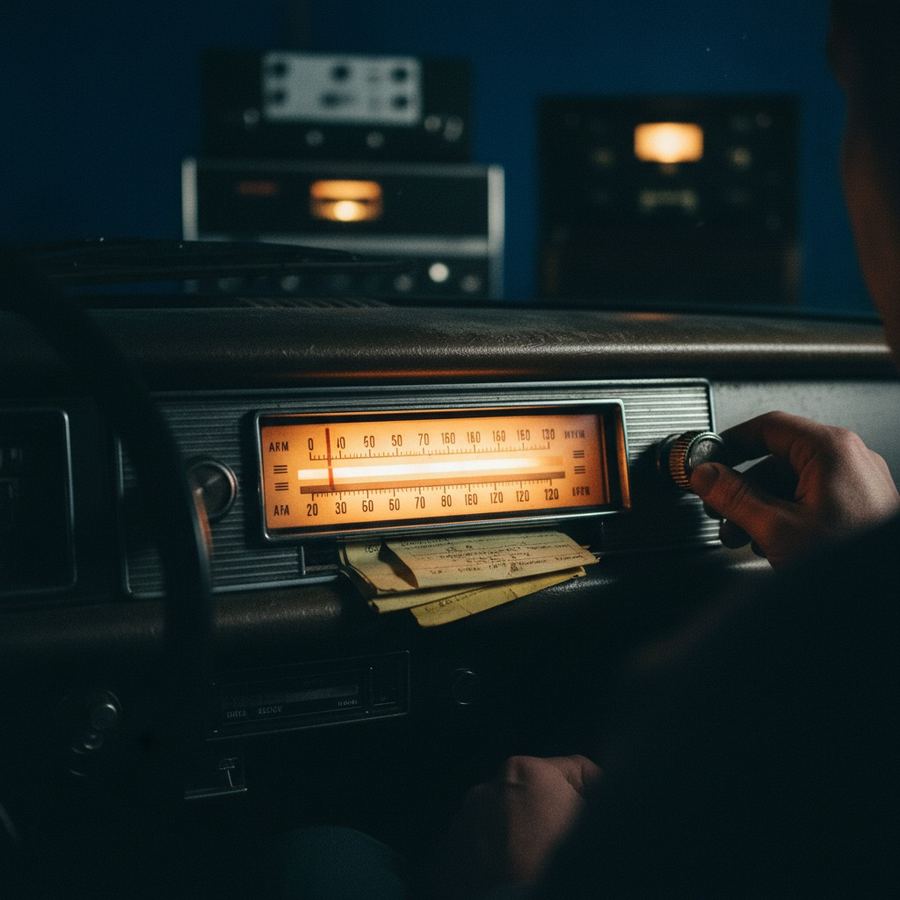
That last part mattered more than anything. FM tuners were not standard equipment in new American cars until roughly 1978. Before that, an FM car radio was a dealer upgrade or an aftermarket unit that most people did not bother with, because most of the stations they wanted to hear were on AM anyway. The chicken-and-egg held for as long as the car fleet took to turn over, which is to say most of a decade.
The FM underground, then the takeover
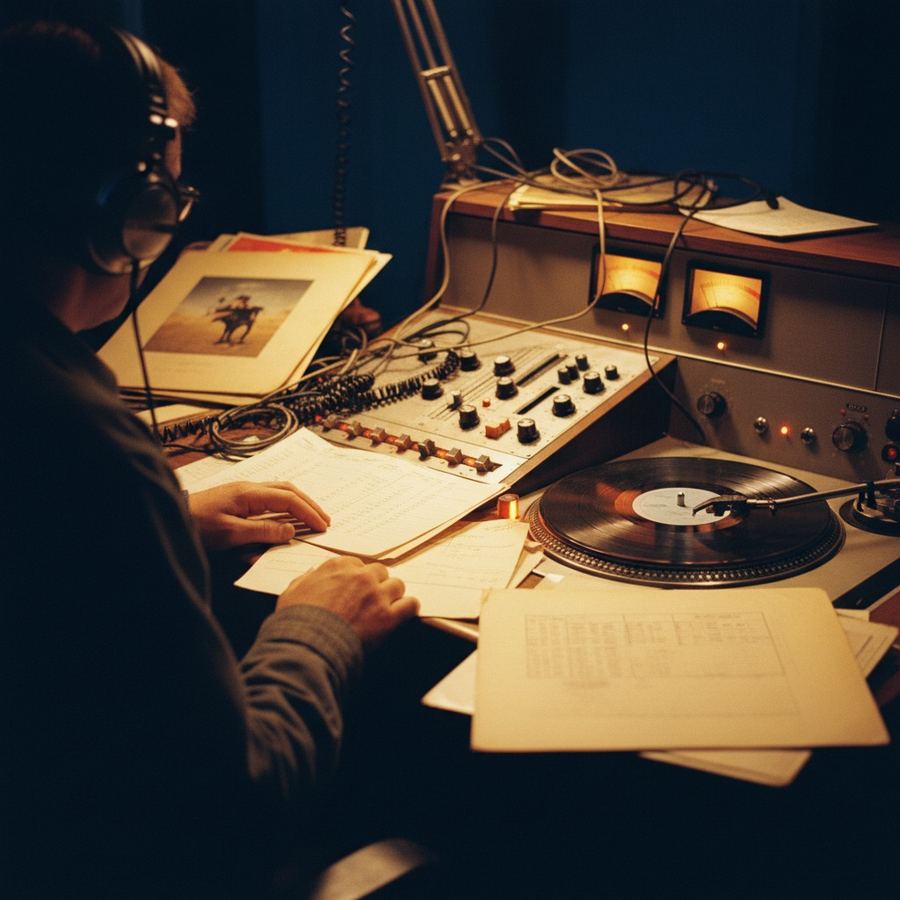
The first crack came on the coasts in the late 1960s. Tom Donahue, who had quit a big AM Top 40 gig because he was sick of the format, put together a free-form rock show on KMPX San Francisco in 1967, and then moved it to KSAN when KMPX's owners balked. The format was album tracks, long segues, and DJs who did not shout. It was the opposite of Drake-era AM in every respect. It attracted the college-age audience that had started to feel like AM's tight playlist was insulting to them. WNEW-FM New York, WBCN Boston, WMMR Philadelphia, KPPC Pasadena, and a handful of others followed through 1968 and 1969, each one building a local FM audience that did not exist before.
By 1972 the consultants had shown up, the free-form was being tightened into Album-Oriented Rock, and the FM numbers were climbing fast. See our piece on the rise of format radio for how AOR went from revolt to clock-driven format in about five years. The turnover of the car fleet through the mid-70s put an FM tuner in every new vehicle, the 1978 model year made FM standard across most of the US auto industry, and by 1979 the crossover had happened: more Americans were now listening to FM than to AM.
AM's reinvention
What was AM supposed to do now? The music was gone or going. Stereo, which might have helped, was a disaster on AM. The FCC authorized AM stereo in 1980 but then refused to pick a single technical standard, letting four competing systems fight it out in the marketplace. No car manufacturer wanted to commit to a standard that might be orphaned, so AM stereo never got real car receiver penetration, and by 1993, when the FCC finally settled on the Motorola C-QUAM system as the de facto standard, it was too late. The audience had moved.
What saved AM, to the extent it was saved, was talk. KABC Los Angeles had been running a talk format since 1960 under Ben Hoberman, and it proved that the format could hold an adult audience through the day. When ABC Talkradio launched in 1982 and then Rush Limbaugh went into national syndication in 1988 out of WABC New York, the template was set. Talk was cheap to produce relative to a music format with a full music library and licensing fees. Talk did not need fidelity. Talk made intimate sense on a mono signal from a single voice at a desk. Sports radio followed the same logic: WFAN New York launched as the first full-time sports station in 1987, and within a decade sports talk was everywhere on AM.
News and talk kept the major-market 50kW AM stations alive. WABC New York, WLS Chicago, KFI Los Angeles, WBZ Boston, KMOX St. Louis, and WGN Chicago all survived the transition by becoming something other than music stations. Their signals were still valuable. Their audiences aged but stayed loyal. The format had changed but the station was still there.
The small-market collapse
That is not what happened to the small-market AM daytimer. A 500-watt or 1,000-watt daytime-only AM in a town of 8,000 people in southern Iowa did not have the signal or the budget to become a news-talk station. It had been running a country or adult contemporary format with local spots and a local morning guy, and when the county's listeners migrated to FM through the 1980s, the small AM just stopped having an audience. Some flipped to Spanish-language programming, which kept a few dozen going by serving an immigrant community the FM stations ignored. Some flipped to religious brokered programming, where the station sold blocks of time to whoever wanted to buy them. Some sold their towers for the scrap copper and surrendered their licenses. Many just went silent.
The FCC's silent-station records through the 1990s and 2000s tell a quiet story of hundreds of AM frequencies going dark in small markets, getting briefly revived by hopeful new owners, and going dark again. We have a longer piece on that specific phenomenon at when stations go dark, the history of silent frequencies, and the related loss of the hyperlocal AM voice at the disappearing small-town AM station.
The ghosts on the dial
Scan the AM band in any American city at night in 2026 and you still hear the layout the shift created. A couple of 50kW talk stations. A sports station. A news station simulcasting its FM counterpart. A brokered religious or ethnic station. Between them, noise. The IBOC HD Radio rollout that was supposed to rescue AM with digital audio never really worked, plagued by interference complaints and receiver adoption that never happened. See internet radio versus traditional broadcasting for how the later technology battles played out.
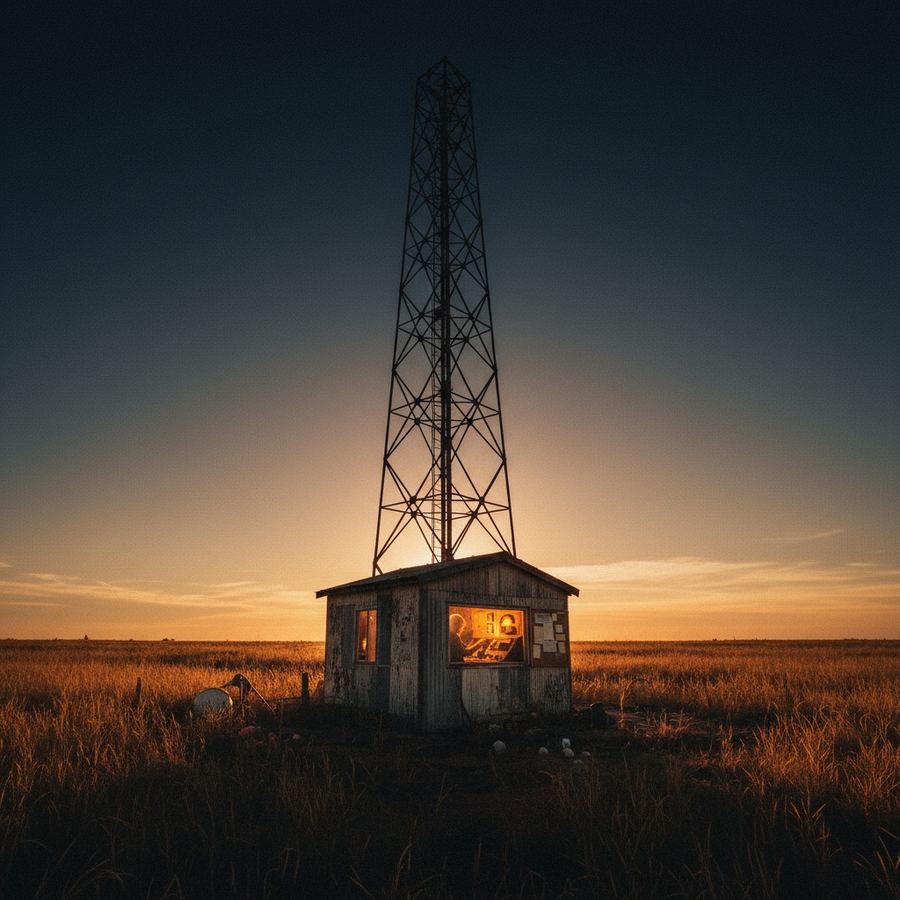
The AM-to-FM shift was not a single event and it was not a fair fight once the consumer electronics finally caught up. FM had the fidelity, FM had the stereo, FM had the new car radios, and FM had a generation of listeners who already associated AM with their parents. What is sometimes missed is how long the older band held on, and how much it gave up in the process. The clear-channel giants are still on the air. The small-market daytimer that used to call the high school basketball game and read the obituaries at 8:45 is, in most places, not. That is the cultural loss the band migration masks, and it is the loss that does not show up in the listening-share graphs the trade press kept publishing through the 1980s.