Almost every week, somebody decides they want to start a community radio station. Sometimes it is a small nonprofit that has been running a podcast and thinks radio is the logical next step. Sometimes a church. Sometimes a college town group trying to fill a gap when the university flipped its student station to classical simulcast. The idea is reasonable and the path forward is longer and more expensive than most people expect.
The short answer: you need a legally qualified nonprofit, an open frequency, a successful FCC application filed during a future LPFM window that has not yet been announced, several years of patience, a transmitter site you can legally use, between $5,000 and $25,000 in up-front gear, and an operating plan that assumes volunteer burnout.
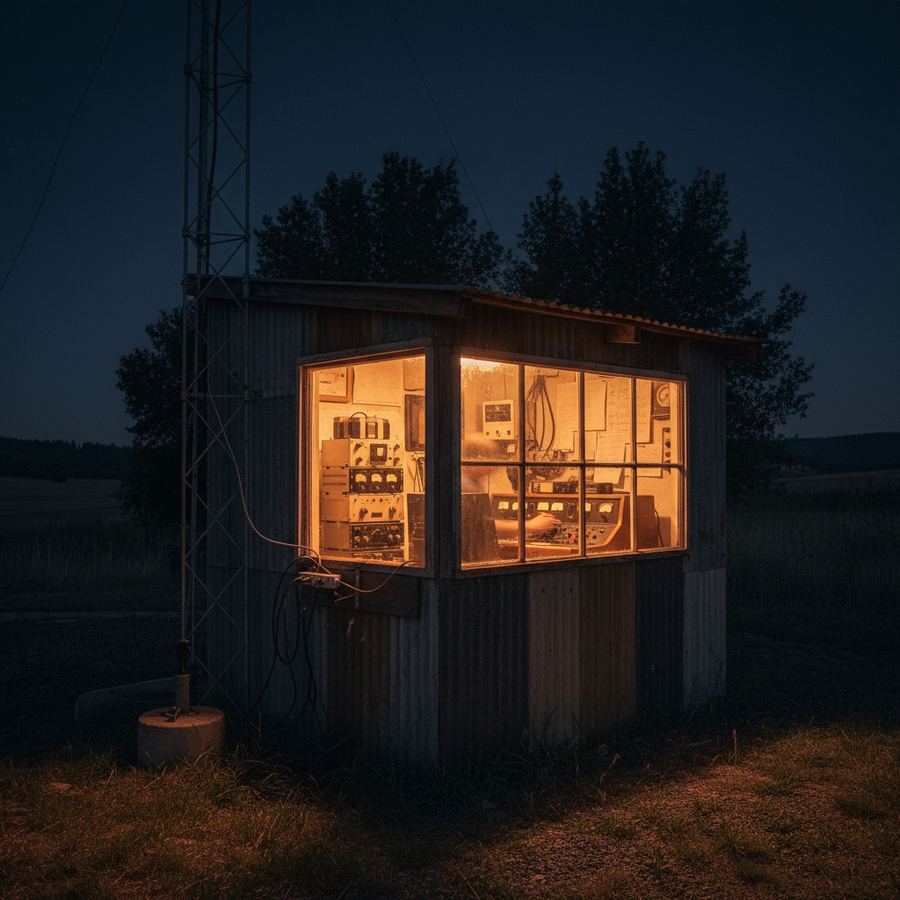
Step one: form a qualifying entity
The FCC Low Power FM service is limited to noncommercial educational applicants. That means your organization has to be a nonprofit educational organization (typically a 501(c)(3) incorporated as an educational, charitable, religious, or cultural entity), a state or local government entity eligible to provide noncommercial educational broadcasting, or a Tribal entity. Private individuals, for-profit businesses, and partnerships cannot hold an LPFM license.
The 501(c)(3) path is what most new applicants walk. The work is tedious but not complicated: file articles of incorporation with your state, adopt bylaws that make the educational purpose explicit, obtain an EIN, file IRS Form 1023 or the streamlined 1023-EZ, and wait for your determination letter. Expect three to nine months. Do this first, because the FCC will want documentation that your entity existed at the time you filed.
If you are forming fresh for a future LPFM application, think hard about local presence. The LPFM point system rewards applicants who have a physical presence within ten miles of the proposed transmitter site for at least two years before filing. A brand new nonprofit starts from zero on the most important scoring criterion.
Step two: find an open frequency
Not every community has LPFM spectrum available. In rural areas you usually have several possible channels. In major metro markets you often have zero. You can run a preliminary LPFM channel search using the FCC's LPFM channel finder tool and any of the engineering services that specialize in noncommercial applicants. The search is driven by the FCC's contour protection rules, which require that your 60 dBu contour (the protected service area) not overlap the protected contours of any co-channel, first-adjacent, or certain second-adjacent full-power FM stations, other LPFMs, or FM translators.
Second-adjacent channel protection is a specific thing that kills a lot of applications. When Congress passed the Local Community Radio Act of 2010, it repealed the third-adjacent restriction that had been imposed in 2000, but it kept the second-adjacent rule. The FCC can waive second-adjacent protection under certain narrow conditions if you can demonstrate no real-world interference, but that waiver is not automatic and requires engineering work to support. For the history of why the rules look this way, see how low-power FM changed community radio.
An LPFM station operates at 100 watts ERP maximum with an antenna height above average terrain of up to 30 meters. That produces a protected service contour of roughly 5.6 kilometers. If your desired coverage area is larger than that, LPFM is not the right tool.
Step three: wait for a filing window
This is the part almost nobody is ready to hear. You cannot just apply for an LPFM license whenever you want. The FCC only accepts LPFM applications during announced filing windows. The first LPFM window ran in 2000-2001 and produced roughly 800 grants, concentrated in rural areas where the third-adjacent channel restriction was not binding. The second window opened in October 2013 and ran for two weeks, drawing about 2,800 applications and producing roughly 2,000 eventual stations.
As of this writing there has been no announced third window. The FCC has from time to time indicated that it will consider opening another window, but nothing has been committed. Realistically, if you are starting a community radio effort today, the honest assumption is that your timeline for getting on the air depends on a window that may be years away and may not match your geographic availability when it does open.
This is a hard reality for new groups to absorb, but it is the most important piece of information on this page. Use the waiting time. Build community programming. Start a streaming station or a podcast network. Establish the two-year local presence that will matter for your point score when a window does open. Do not quit your day job.
Step four: the application itself
When a window opens, you file FCC Form 318, which is the official LPFM application. The form asks for a description of your entity, documentation of your nonprofit status, your proposed transmitter location, an engineering certification, an educational statement, and an attestation of your ability to construct and operate the station. The form is long but not impossible. Most competent applicants work with a broadcast engineer to prepare the technical portion and with an attorney familiar with FCC rules to check the legal portions.
If you are the only applicant for a given frequency in a given geographic area, congratulations, your application goes straight into the FCC's processing queue. If multiple applicants want the same frequency, you fall into a mutually exclusive (MX) group. MX groups are resolved through the FCC's LPFM point system, which scores each applicant on criteria including two years of local presence, local origination commitment, main studio proximity, diversity of ownership, and a tribal preference. The highest-scoring applicant wins. Tied scores are resolved by time-sharing arrangements or, as a last resort, by voluntary withdrawal and merger.
Step five: the construction permit phase
A granted application becomes a construction permit (CP). You then have eighteen months to build the station and file Form 319 to convert the CP into a license to cover. This is where a lot of LPFM grantees run aground. The paper win is free. The building is not.
You need a transmitter site. That usually means negotiating a lease on an existing tower (cell carrier, full-power broadcaster, utility), securing land rights, running power and a studio-to-transmitter link (STL), and getting local zoning approval. Tower rentals run from a few hundred to a few thousand dollars a month. You also need grounding, lightning protection, and EAS equipment.
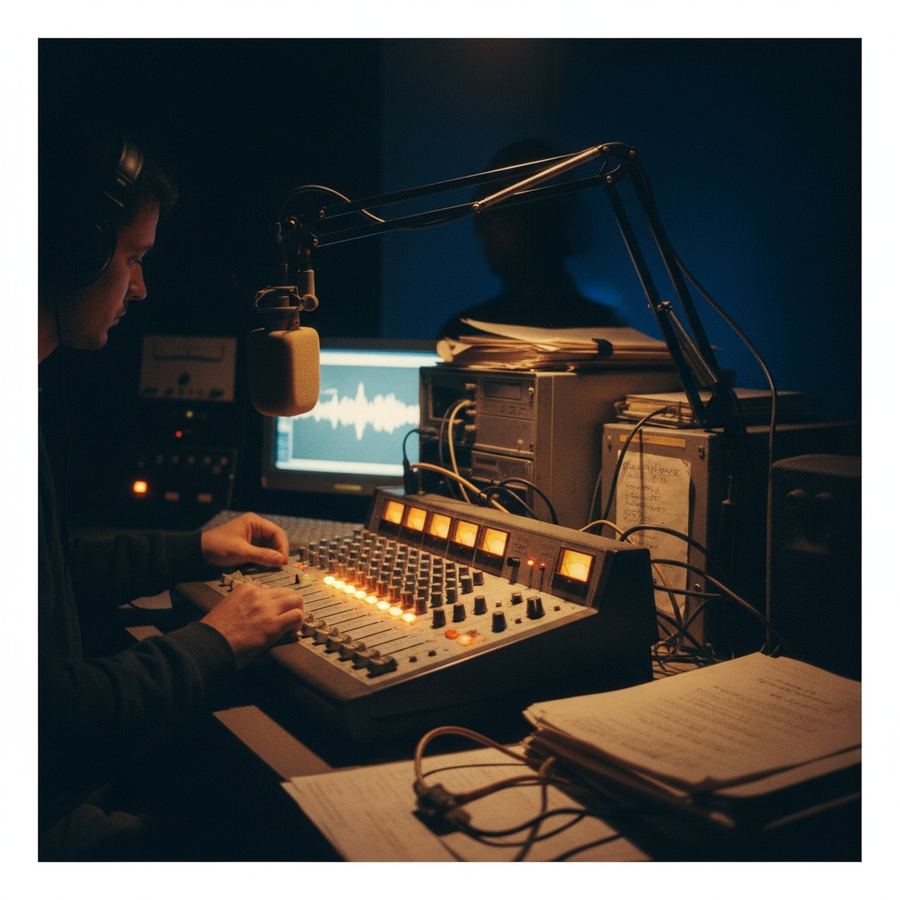
What the gear actually costs
A realistic minimum LPFM build, including studio and transmitter, runs about $5,000 on the low end if you buy used and do your own integration, up to $25,000 for a clean new installation. Broad strokes:
- Transmitter. A 100 watt FM transmitter runs $1,500 to $6,000.
- Antenna and transmission line. Circularly polarized antenna, mounting hardware, and coax. $800 to $3,000.
- STL. Licensed Part 74 link, an IP codec pair, or a simple audio-over-IP setup. $500 to $4,000.
- EAS unit. Compliant encoder/decoder, required by rule. $2,000 to $3,500 for a Sage or DASDEC.
- Studio gear. Mixing board, microphones, headphones, computer, playout software (StationPlaylist, Rivendell, or similar), audio processor. $1,500 to $8,000.
- Engineering labor. A contract broadcast engineer for the proof-of-performance measurements and tower work. $1,000 to $5,000.
These numbers are lower than ten years ago because the audio-over-IP and used gear markets have matured. Still real money for a new nonprofit.
Step six: first transmission and ongoing compliance
Signing on for the first time is genuinely exciting and also the beginning of a permanent compliance workload. An LPFM is a licensed broadcast station, and the FCC expects it to operate like one. That means running weekly and monthly EAS tests and logging the results, maintaining the online public inspection file (now handled through the FCC's public file system), filing quarterly issues and programs lists, tracking political broadcasting time during election seasons, handling biennial ownership reports (Form 323-E for noncommercial), and renewing your license every eight years.
It also means keeping the station staffed well enough to handle the day-to-day. That is where most LPFMs actually live or die. For a longer look at the human side of this work, see volunteer DJ culture in small market stations. For a wider frame on the sector, public access versus community broadcasting lays out how LPFMs fit alongside the other pieces of the independent media ecosystem. And for why the whole exercise is worth doing at all, there is why local radio still matters.
Starting a community radio station is not an impossible project. It is a multi-year project that rewards organizations with serious local roots, patient leadership, and realistic expectations. The people who succeed at it tend to be the ones who understood from day one that the license is not the goal. The license is the cost of admission. The goal is the fifteenth year, with a station still on the air and still serving the community that built it.